
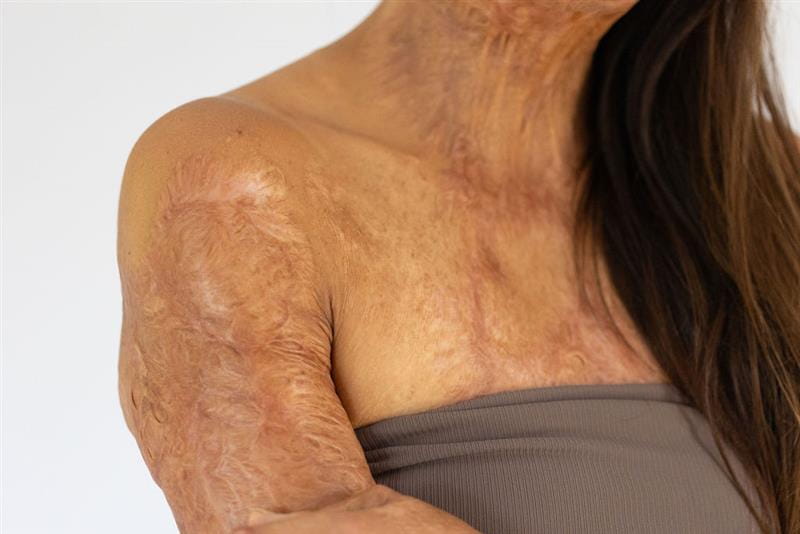
Why Burn Scars Require Specialised Care
Burn scars are different from other scars. They are often deeper, more complex, and can affect both function and appearance. Burn scars may tighten over time, restrict movement, or cause discomfort such as itch or pain. Because of this complexity, they require specialised assessment and carefully tailored treatment strategies.
The Changing Nature of Burn Scars
Burn scars do not remain static. They may continue to evolve for months or even years after the original injury. In some cases, scars can become thicker, firmer, or more restrictive as they mature. Early consultation with a specialist helps guide treatment at the right stage, though even long-standing scars can benefit from professional management.
Comprehensive Assessments for Burn Scar Treatment
Effective burn scar treatment begins with a detailed consultation. This is not limited to how the scar looks on the surface but also considers its behaviour, impact, and risks. A thorough assessment usually includes:
● Comprehensive history-taking – including details of the original injury, prior treatments, wound healing, and any complications.
● Scar risk assessment – identifying individual factors such as skin type, personal or family history of hypertrophic or keloid scars, and any underlying medical conditions that may influence healing.
● Careful visual examination under different lighting conditions to evaluate colour and surface changes.
● Assessment of scar thickness, pliability, and texture to understand how the tissue feels and moves.
● Evaluation of movement and function, particularly where scars cross joints or mobile areas.
● Discussion of symptoms such as itch, pain, or tightness that may vary during the day or night.
● Objective measurement tools including standardised photography or 3D imaging to track progress accurately over time.
A structured assessment ensures that treatment plans are based on the specific needs of the individual.
Treatment Options for Burn Scars
Successful burn scar treatment usually involves a multimodal approach. Options may include:
● Topical silicone, compression garments, and dressings to support long-term scar management
● Laser scar removal using carefully selected settings to stimulate collagen remodelling
● Laser-assisted drug delivery (LADD), where medications such as corticosteroids or tranexamic acid are applied through fractional laser channels
● Surgical scar revision (e.g. Z-plasty, W-plasty, grafting) for contractures or tethered scars
● Occupational therapy and mechanical tissue therapies such as LPG
Endermologie medical for softening and improving tissue mobility
The right plan is always personalised and may combine several methods across multiple sessions.
Avoiding Complications
Burn scars can be unpredictable and fragile. Inappropriate treatments may worsen scarring or pigmentation. For this reason, burn scar treatment should only be carried out in a medical setting by practitioners experienced in managing complex wounds and scars.
Recovery and Aftercare Realities
After treatment, temporary redness, swelling, or pigment changes are expected. In some cases, scars may appear more noticeable before gradual improvement is seen. Protecting treated areas from sun exposure, heat, and environmental irritants is important during recovery. Patients should plan treatment around major life events, as healing can take several weeks.
Long-Term Management
Improvement in burn scars is typically gradual and requires commitment to a treatment plan. Multiple procedures are often needed, and results vary depending on For management of burn injuries, Scarless – The Clinic provides thorough assessments and tailored treatment plans focused on thermal damage. Individual results may vary.